


How to Use Adaptive Headlamps and Auto High-Beams on the 2026 Ford Lineup
Night driving asks a lot more from your headlights than just being on. Roads bend, traffic appears without warning, and poor visibility can turn a routine commute into something genuinely stressful. The 2026 Ford lineup addresses this with two technologies: Ford adaptive headlamps that physically follow the road ahead and Auto High-Beam systems that handle your brights intelligently.
Whether you’re looking at the Explorer, Ranger, or Mustang Mach-E, understanding how these features work before you drive makes a real difference. Contact us at Stivers Ford South if you have questions or want to talk through which model fits your needs.
What Ford Adaptive Headlamps Do
Most drivers understand the basics of headlights. What often gets overlooked is how conventional fixed-beam lights leave the outside of a curve completely dark, precisely when you need to see around it. Ford adaptive headlamps fix that by making your lights responsive rather than static.
Steering-Responsive Adaptive Headlamps
The steering-responsive version uses sensors to track your steering wheel angle in real time. As the wheel turns, the headlamp housing rotates to match, sending light into the curve before your vehicle has even started tracking it. That proactive illumination is genuinely valuable on winding rural roads, highway on-ramps, and suburban streets with tight intersections. Pedestrians, cyclists, and road debris come into view sooner because the light arrives ahead of you.
The system activates above 3 mph when the headlamps are on and in Autolamp mode. The inside beam also extends to improve visibility into adjacent lanes when lane markings are present, and adjustments may factor in vehicle speed, road conditions, and GPS data.
Auto High-Beam Headlamps
Ford’s Auto High-Beam functionality takes a different approach. Instead of adjusting direction, this system monitors surrounding traffic and switches between high and low beams based on what it detects. On a clear road, it activates high beams for maximum visibility. When it picks up oncoming headlights or taillights from vehicles ahead, it dims automatically to avoid blinding other drivers. Once the road clears, the high beams come back on without you touching anything.
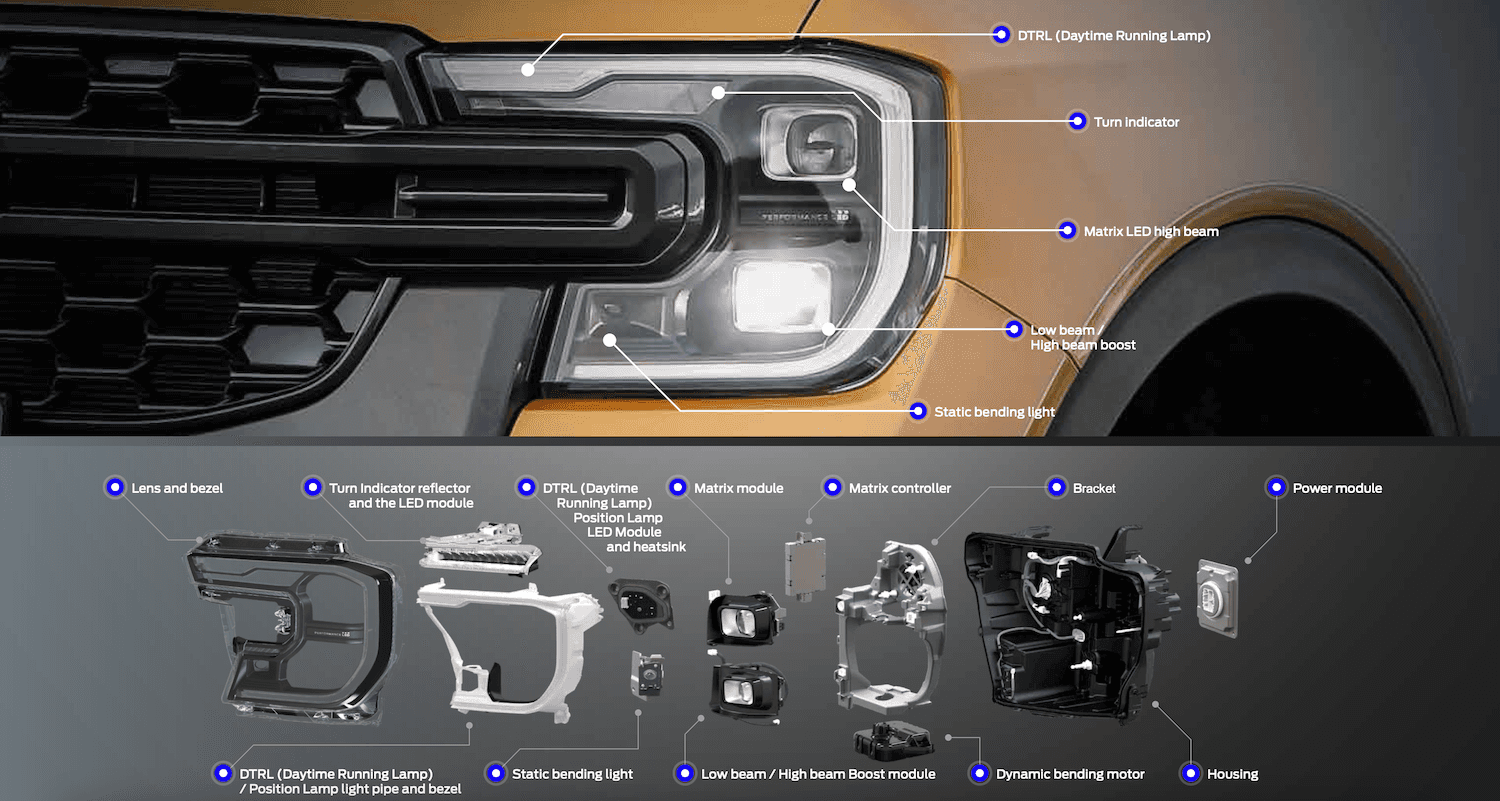
2026 Ford Explorer: Directional Adaptive Headlamps on the Platinum Trim
The 2026 Ford Explorer brings directional adaptive headlamps to its Platinum trim. Ford has paired this technology with its highest-end configuration, giving drivers who choose that model a real advantage after dark.
If you’ve ever felt uncertain navigating an Explorer on a winding road at night, the directional adaptive system on the Platinum trim speaks directly to that concern. As the Explorer takes a turn, the headlamps pivot to keep the full arc of the curve illuminated. That’s especially useful for families on longer highway stretches or moving through suburban neighborhoods with frequent turns and minimal street lighting.
2026 Ford Ranger and Mustang Mach-E: Co-Pilot360 Standard on Every Trim
Ford takes a more inclusive approach with the 2026 Ranger and Mustang Mach-E, making Auto High-Beams standard across every trim level through Ford Co-Pilot360. No premium package required, no option box to check.
That matters because it reframes smart lighting as a baseline expectation rather than a luxury upgrade. Ranger drivers heading out to early-morning job sites or late-night hauls get the same intelligent beam switching as Mach-E drivers navigating evening commutes. If you’re upgrading from an older model, this shift will feel significant.
Quick Comparison: Adaptive Lighting Across the 2026 Ford Lineup
| Model | Trim Level | Adaptive Headlamps | Auto High-Beams | Notes |
| 2026 Ford Explorer | Platinum | Available (Directional) | Standard | Steering-responsive; activates above 3 mph |
| 2026 Ford Ranger | All trims | Standard (Co-Pilot360) | Automatic beam switching | |
| 2026 Ford Mustang Mach-E | All trims | Standard (Co-Pilot360) | Automatic beam switching |
If you’re still deciding which model fits your lifestyle, we’re happy to walk you through the differences. You can also explore financing options to get a clearer picture of what works for your budget.
How to Activate Each Headlamp System on Your 2026 Ford
Ford has kept the activation process straightforward on both systems.
Activating Steering-Responsive Adaptive Headlamps (Explorer Platinum)
- Turn on your headlamps and enable Autolamp mode.
- On the SYNC touchscreen, go to Settings > Vehicle > Lighting.
- Toggle Adaptive Headlamps to on.
- The feature activates automatically above 3 mph while driving.
Activating Auto High-Beam Headlamps (Ranger and Mustang Mach-E)
Enable Auto High-Beams through your lighting controls or Co-Pilot360 settings. Once high beams are selected and conditions warrant, the sensors handle all automatic switching between high and low beams.
Real-World Night Driving Benefits
The advantages go beyond spec-sheet language. On an actual nighttime commute, the difference between fixed beams and adaptive lighting becomes obvious pretty quickly, especially on unfamiliar roads.
Reduced eye strain is one of the first things drivers notice. When the lights are doing more of the work, your eyes compensate less. On longer drives where fatigue builds up, that really does add up. The Auto High-Beam system also removes a persistent mental task. Rather than monitoring oncoming traffic and deciding when to dim, the system handles it, freeing your focus for the decisions that actually matter.
Better spotting distance for pedestrians and cyclists is another concrete gain, particularly in areas where street lighting is inconsistent. Adaptive headlamps extend useful visibility into the road’s margins, not just the center lane.
Schedule a Headlamp Feature Demo at Stivers Ford South
See the Technology in Person
Reading about these systems only gets you so far. Seeing them in action tells a much fuller story. At Stivers Ford South in Union City, GA, we can walk you through the 2026 Explorer, Ranger, or Mustang Mach-E and show you exactly how the adaptive and Auto High-Beam systems work firsthand.
That hands-on experience is especially helpful when you’re weighing trim levels or comparing models. Our team can break down the differences, explain how to activate each feature, and help you think through what to expect on your specific roads. If you’re still in the consideration phase, we can also connect you with financing options to help you move forward with confidence.
Images by OEM
0 comment(s) so far on How to Use Adaptive Headlamps and Auto High-Beams on the 2026 Ford Lineup